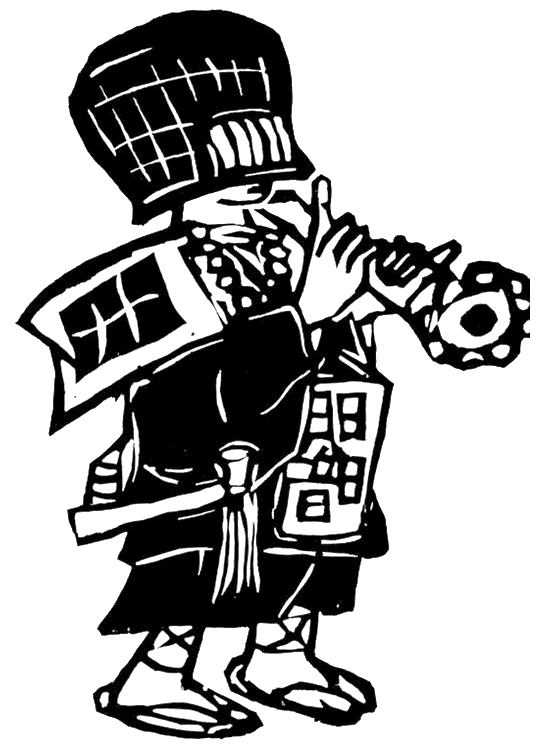
Yatsuhashi Kengyō
八橋 検校

1614 - 1685
Composer
|
Yatsuhashi Kenkaku was the founder of early modern koto music and is credited with establishing koto kumikyoku and danmono in his own koto works. A musician of the early Edo period (1624-1685), he was active in the field of shamisen in Settsu and was a master of the instrument. He was also a master of the koto and kokyu (Japanese violin). He later went to Edo (present-day Tokyo) to learn the chikushi koto from Hosui, and later played in Kyoto. He improved the instrument itself and its playing method for solo koto playing, and formalized the musical formulas such as "danmono" to create the basis of the Japanese koto as we know it today. From childhood he was visually impaired. He first made a name for himself in Settsu, Osaka, with the shamisen, which is one of the arts of the Todoza. He founded "Kumiuta 13 songs", which is very different from Tsukushi Koto's kumiuta (Kenjun 10 songs) in terms of both music and lyrics, further enhancing the literary artistry of the kumiuta. Yatsuhashi Kengyo established the foundation of modern sokyoku by creating this "Yatsuhashi 13-gumi" and composing three instrumental songs as danmono. This is called the "Yatsuhashi style", and from around 1663 he lived in Kyoto and raised many disciples. In 1662, he visited Matsudaira Yamatomori's residence and performed koto kumiuta and shamisen kumiuta. Yatsuhashi, a Kyoto sweet, comes from his name. It resembled the shape of a koto, so it was named Yatsuhashi. His gravestone is in Kyoto at 35°01'08.7"N 135°47'24.4"E
|
| Also Known As Jōdan |
Students
Kitajima Kengyō ???? - 1690 |