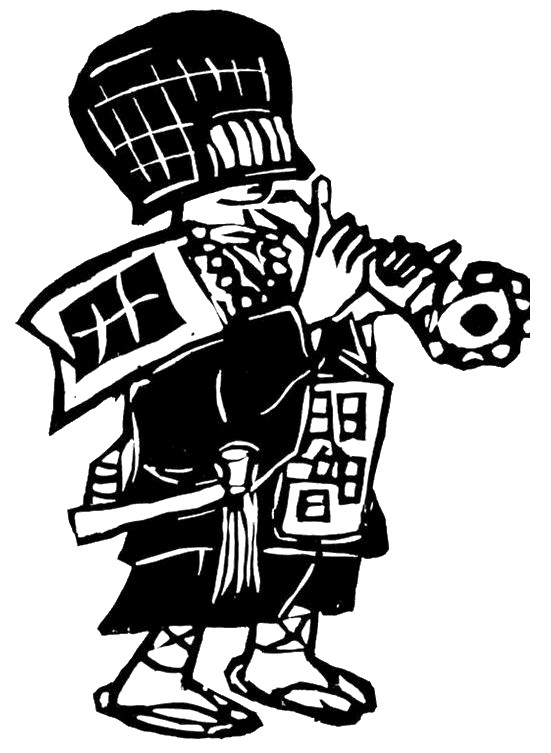
The new Myoan-kyōkai named Suzuki Taizan (Kodo) as the head shakuhachi master. Since he has been adopted by the Higuchi family in Kyoto , he used the name Higuchi Taizan. Taizan was born in the third year of the Ansei, 1856, in Nagoya and died in 1914. He received his first shakuhachi training from Kanemoto Seien, the founder of the Seien-ryū in Nagoya , and mastered the honkyoku repertory. In 1885 he moved to Kyoto, where he continued his shakuhachi training with the great master Ōzaki Shinryū and Tsukahara Gyokudō. In addition to the eleven honkyoku from the Seien-ryū, which constituted the main repertory, he also arranged and compiled twenty-one other honkyoku pieces that were preserved in the different temples of the Fuke-shū after the Dajokan Fukoku decree in 1871. Higuchi Taizan applied a new notation system with ro, tsu, re, chi, ha, I to them, instead of using the traditional fu, ho, u, e, ya. I system. Higuchi Taizan became the 35th Kanshu of the temple Myoanji.
One of the most prominent schools within the Myoan-Ha, is the Taizan-ryū. He spent much of his time collecting and organizing pieces from the Myoan tradition as well as many others. His outstanding talents as a player and his work expanding the repertoire of the Myoan Society revitalized the Myoan tradition. He is called “the founder of the restoration of the Myoan-ha”. “Kodo” compiled the Honkyoku that is currently used in the Myoan-Ha today.
Information compiled, with permission, from email correspondence with Norman Stanfield Ph.D. (ABD) And Christopher Yohmei Blasdel’s “The Shakuhachi a manual for learning” and “ Shakuahachi Zen the Fukeshu and Komuso” by James Sanford.
|